

Hello! Welcome to Curious Nessie and our first post. Whilst reading a great little book about the beautiful city of Bath I stumbled across a short paragraph, no more then a couple of sentences, about an interesting ghost said to have haunted the area around Bath’s famous Abbey. The legend goes that the spectre is that of a Roman legionary, but how could people know that when he is reported to be naked. Intruiged, I tried to dig up some more infomation about the figure, yet all I could find was people referencing a policeman giving chase to the man in his birthday suit only for the persuee to vanish, leaving the policeman understandably shaken. Who this policeman was and when this event took place no one seems to know but it got me thinking. What other ghostly Romans are out there?
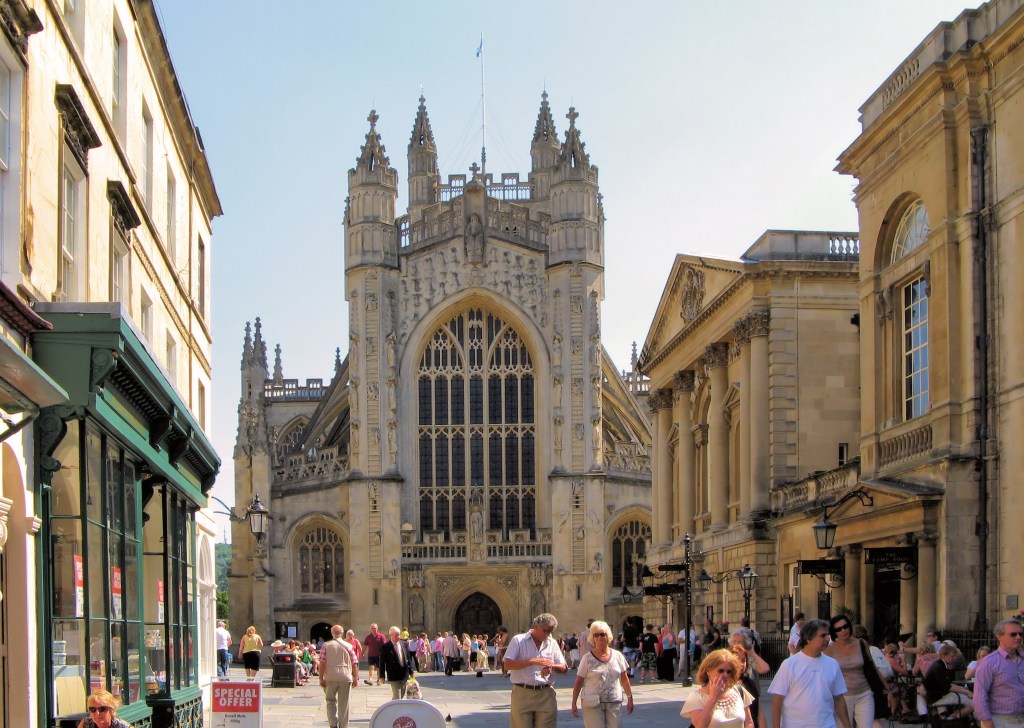
The Treasurers House – York
The Treasurers House was home of the treasurers of York Minster in 1100 before their office was abolished by King Henry VIII. It was almost entirely rebuilt in the 17th Century. Over the years it has been split into three homes, restored back to one and has hosted royalty, but the most important fact for this next story is that it was built on an ancient Roman road.

Fast forward to 1953 and a young plumber finds himself in the cellar of The Treasurers House. Harry Martindale was on a ladder installing central heating pipes and below him excavated from the cellar floor was a section of Roman road. As he worked, Harry heard a note from a brass instrument seemingly coming from inside one of the walls. Harry glanced down from his ladder and was startled to see the helmet and plume of a Roman soldier marching out from the wall. Terrifed, he stepped down from the ladder and fell backwards into the corner of the cellar. Following the marching soldier came a large horse with another solider on its back. As the horse moved, Harry realised that he could only see the horses hooves when it got to the excavated part of the roman road. Behind the horse came several more Romans, all looking as if they were walking on their knees until they came to the excavated area. Harry noted that one held a long trumpet and that several of the men seemed weary or ill. They wore green tunics, leather skirts and plumed helmets. They also had their sandals (or thongs) tied up to their knees and each carried a round shield. Then they walked through the opposite wall and were gone. Harry scrambled from the cellar, phoned his boss to tell him he wasn’t going back and was then signed off from work for two weeks for stress. Harry went public in the 70s with his encounter and his story has become widely recounted.
There are several facinating points about his encounter, the firstly being the round shield. Most people would be right in pointing out that the Roman legionarys were famous for the big square ‘Scutum’ shield and in 1953 that was the historic fact. However, it is now agreed that in the 4th centrury AD the style changed to a more oval or rounded shape, a fact that Harry wouldn’t have know at the time. Another point is the knee length ‘thongs’ , I can’t seem to confirm whether or not Roman soldiers wore them. Perhaps Harry mistook them for legwraps which were more common in the 4th Century AD. The final point is the remarkable fact that they walked not on the cellar floor, but about 18 inches below it, atop the Roman road. This reflects some reports of ghostly Roman legionaries marching up the M6, which is also built upon a Roman road. These shadowy figures also appeared cut off as if they were walking through the motorways tarmac.
So what did Harry witness? Time repeating itself? Did he truely witness anything at all? We may never be able to outright confirm or debunk his encounter, but regardless it is one of the most interesting ghost tales from Britain.
Mersea Island – Essex
Mersea island lies just off the coast of Essex and 9 miles south of Colcester. Colcester stands on the area where the important city of Camulodunum once stood in Roman Britain. Connecting Mersea island to the mainland is a half mile long causeway called the Strood. This road way has been dated back to the 6-7th century AD and is tidal, meaning that at high tide the sea floods the road, making Mersea a true island for just over an hour.

Local legend tells of the apparition of a Roman Legionary who marches across the Strood. The story was made popular by the author, James Wentworth Day in his book Essex Ghost (1973). In the book he recounts the story of Jane Pullen, who ran the pub The Peldon Rose from about 1910 into the late 1930s. One evening when she was out walking she was followed by disembodied marching. A fellow traveller was unnerved by the noise of hobnailed boots and Jane Pullen said,
“keep all along of me and no harm will come to you. ‘Tis only one of those owd Romans come out of the barrows to take his walk”
The barrows she refers to is one that lies a short distance from the Strood and, in the following years, it was discovered that it was a Romano-British burial and that the cremated remains of an adult was found within. An interesting coincedence for sure.
More recently, locals have reportedly claimed that the apparition of a Roman can be sighted in car headlights and that sounds of battle drift across the Strood, even at full tide.
Hunters Tor – Dartmoor
To the east of the wonderful national park of Dartmoor stands Hunters Tor. Hunters Tor is a granite outcrop standing 320 meters above sea level and is the location of an ironage hillfort.
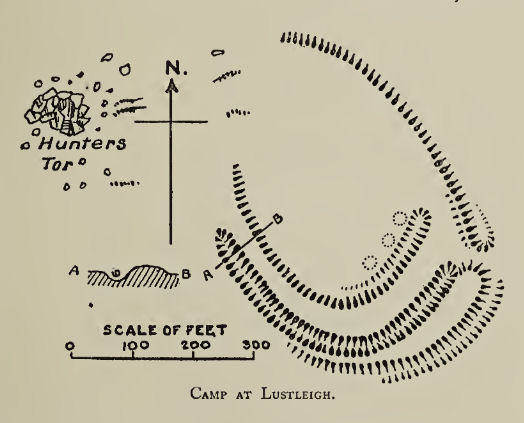
Local legend goes that there was a bloody battle between the local Britons and the Roman invaders leading to the capture of the hillfort. Now the spectres of Roman legionaries are spotted in the area during a full moon. As a side note, in the book Atlas of Magical Britain (1991) there is a small paragraph recounting how two women witnessed 12 men on horseback in medieval garb, plus hunting dogs gallop behind a stone wall and disappear, leaving no hoof prints or evidence that they were there.
Badbury Rings – Dorset
Badbury Rings is the name given to a hill fort dating back 3000 years located near Bournemouth. The site was inhabited by the Durotriges tribe until the Roman occupation in 43AD. The Romans constructed 5 roads at the site and established a Romano-British settlement 2 1/2 miles to the southeast.

In the fantastic book, The Roadmap Of British Ghosts (2022) by Ruth Roper Wylde, there are several encounters of Roman ghosts mentioned. I highly encourage anyone reading this to pickup a copy to read them all for themselves but I will recount the Badbury Rings encounters here.
A gentleman recalls that his mother spoke about seeing a Roman Centurion as she came past The Rings. She could only see him from the shins up and interestingly her husband couldn’t see anything at all. This is eerily similar to the encounter discussed in The Treasurers house above. It would be interesting to know if the apparition was spotted where a Roman road once ran and if the centurion was stood on that. Ruth Roper Wylde also mentions that two policemen thought they saw a Roman Army at the Rings and assumed that it was a reenactment but there wasn’t one. On top of this sounds of battle have been reported by people camping nearby.
These are just a small collection of stories and I think i’ve barely scratched the surface, it seems that the UK has more than their fair share of Roman spectres marching around the countryside. Which make me wonder if the other former Roman territories have their own Roman ghost stories. If you know of a shadowy centurion or any other form of ghostly Roman, please reach out to me via the Do You Have A Story? page at the top or leave a comment below, I would be fascinated to hear them!



 Curious Nessie
Leave a comment