
Picture this. You’re walking home from work one evening; it’s dusk, and you can just make out the trees lining the footpath. You’re thinking about what to have for dinner when you see a shape near the trees. The hairs on your neck stand up as you realize you’re looking at a labrador-sized black cat, staring intently back at you. It rises from its crouch, turns, and runs into the gloom. You take a deep breath as you try to figure out what you just saw. It looked like a panther, but there are no big cats in the UK, are there?
Sightings of big cats have been regularly reported up and down the UK since the late 70s, with famous sightings that caught the public’s attention, such as the Beast of Bodmin and the Beast of Exmoor. Even my hometown of Chippenham, Wiltshire, had a rash of sightings in early 2025, with a former police officer seeing a black cat sprint across the road as he was walking his dog at 6:30 in the morning. This sighting wasn’t in a forest or on moorland; this was on the edge of a large housing estate. The man reports:
‘The animal’s body was black in colour; it was half as big again as my fully grown Labrador, but its legs seemed shorter.’
A second sighting was reported a week later near the same location by a lady driving on the bypass. She saw a large black animal with ‘chunky legs’ walking into the undergrowth.
Interestingly, there was a sighting of a big black cat around the nearby town of Melksham in late November and early December 2024. These sightings were only 4.5 miles away from the Chippenham sightings and were even mentioned in a BBC article on the 11th of January 2025. The local newspapers picked up the story on the 5th of February, which you can read here: https://www.gazetteandherald.co.uk/news/24909246.multiple-big-cats-sighted-chippenham-area/
Several websites and individuals have set out to try to gather as many eyewitness reports as they can. One such website is Surrey Panther Watch (https://surreypantherwatch.co.uk/), which has gathered 122 witness testimonies to date. Meanwhile, according to freedom of information requests, UK police forces have received 155 big cat reports in three years.
Many people remark about black cats as being black panthers, but what exactly is a black panther? Black panthers are not a distinct species but refer to melanistic members of the Panthera genus, specifically leopards and jaguars. Melanistic leopards and jaguars still have their rosettes/spots present, but they are more difficult to distinguish with black fur. The puma, or mountain lion, of the Northern, Central, and Southern Americas is also referred to as a panther; however, there have been no reported, authentic cases of a melanistic puma in the wild or captivity.
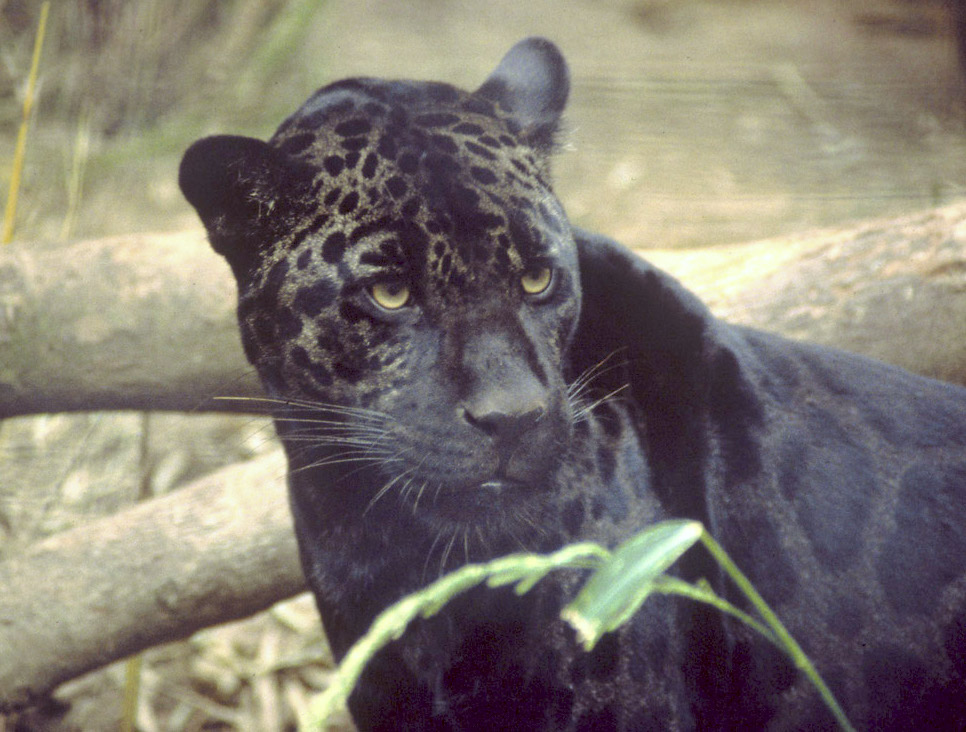
So other than eyewitness accounts, is there any more evidence of these cats in the UK? Well, in terms of photographic evidence, there isn’t anything conclusive; many photos you see floating about online have been disproved. However, more trail camera footage and photographic evidence are surfacing all the time. Indeed, the show Expedition X caught trail camera footage of a black cat stalking through the woodland in one of their episodes. Another photo (below) was discovered by the documentary Panthera Britannia and claims to have been taken in the UK.

Physical evidence includes tracks, fur, and carcasses of prey animals such as sheep and deer. One of these bits of fur, which was found near a sheep kill in Gloucestershire in 2022, was tested for DNA. The results came back as leopard (Panthera pardus). And this is just one of six publicly known positive DNA tests for leopard; the other most recent one was taken from a sheep carcass in Cumbria in 2023.
But where did they come from? Well, the most accepted answer is that they are discarded pets due to new licensing. Before acts such as the Dangerous Wild Animal Act and the Endangered Species Act came into force, people could simply purchase any animal, including big cats, from a pet shop. London’s own Harrods famously had their own pet shop that sold alligators, lions, and monkeys.
Once these acts came in, however, it became much more difficult to own these exotic pets, and many were set loose. Over the years, the gene pool may have been supplemented by escapees from collections and zoos as well as illegal trading.
Not all big cat sightings are of the black variety, though, and I’ll finish this post with the story of Felicity the Puma.
In October 1980, near Cannich, Glen Affric, a farmer named Donald ‘Ted’ Noble had been suffering from lifestock getting killed. His neighbour, Jessie Chisholm had been seeing big cats on her land for several years and Ted decided to set a cage trap on Jessie’s land. On the 29th of October a Puma was caught in the trap. It became clear that the cat wasn’t completely wild and may have been a pet. Experts estimated that she had only been wild for less than 48 hours and she was suprisingly tame and obese.
The puma was rehomed at the Highland Wildlife Park, where she was named Felicity. Felicity rapidly became popular due to her tameness, and her keeper would often walk with her slung across his shoulders. Her keepers also found that she wouldn’t eat unskinned rabbits, further adding to the suspicion that she had been hand-reared. Interestingly this this suggested that Felicity was not responsible for the livestock killings, further proven by the fact that sightings and killings continued after Felicity’s capture
In January 1985, Felicity died peacefully in her sleep. An autopsy revealed that she died of old age at 20 years old. Much older than the average lifespan of 12 years for a wild puma. the autopsy also supported the idea that she was a former pet and had been over fed. Felicity was sent to Edinburgh to be taxidermidy and the staff at the Highland Wildlife Park requested that she was not to be mounted in a traditional snarling pose as she had been ‘a lovable and gentle beast’.
In 1986, Felicity went on display in the foyer of Inverness Museum, which is still her home today should you wish to visit her. Felicity is arguably the most famous UK big cat, and the mystery behind her origins has never been solved.

Image by Ewen Weatherspoon, © Inverness Museum and Art Gallery

 Curious Nessie
Leave a comment